Product Type:NFJ microporous cermet material
Added time:2023-06-29
product description:一、引言众所周知,摩擦材料是由增强材料、粘结剂和摩擦填料组成的三元复合材料。摩擦填料是用于调节不同温度的摩擦磨损性能。他有常温、变温和高温的区别。在这里我们要介绍的微孔金属陶瓷材料是一种新型的高温增摩、低磨损的功能性摩擦材料调节剂,它的主要原材料由深处理的黑色金属与各种陶瓷相组成,是一种非均质
PHONE:400-969-2688
1、 Introduction
As is well known, friction materials are ternary composite materials composed of reinforcing materials, adhesives, and friction fillers. Friction fillers are used to regulate the friction and wear performance at different temperatures. He has the difference between room temperature, variable temperature, and high temperature. The microporous cermet material we are going to introduce here is a new type of functional friction material modifier with high temperature friction enhancement and low wear. Its main raw material is composed of deeply treated Ferrous and various ceramic phases, which is a heterogeneous composite material. A type of microporous metal ceramic heterogeneous composite material made by high-temperature modification of metal and ceramic single-phase, foaming and carbonization treatment.
chemical composition

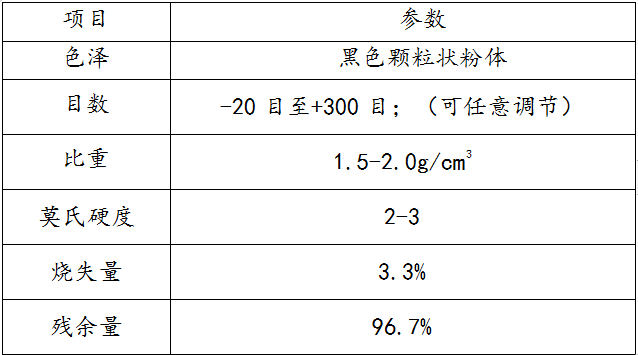
performance parameter
Solved problems
Internal cavities in brake pads; Release of brake pads; Metal inlay of brake pads; The noise generated during braking; The thermal expansion of the material affects the adhesion performance of the brake pads.
advantage
Low cost of raw materials; Low coefficient of thermal expansion; There is no spark, metal inlay, carbonization, shaking, or noise generation during braking; Lightweight; environment protection
Friendly reminder
1. Add 3-5%;
3、 Physical performance:
Color: black granular powder
Mesh size: -20 mesh to+300 mesh; (adjustable at will)
Specific gravity: 1.5-2.0g/cm3
Mohs scale hardness: 2-3
Loss on ignition: 3.3%; Residual amount: 96.7%;
4、 Macro and micro morphology:
1. The macroscopic morphology is fine particles, and the grading range of particle size is -20 mesh to+300 mesh.
2. Microscopically, there are three main characteristics under SEM: a large number of layered structures, a considerable number of microparticle distributions, and partial void structures. (See Attachment 2) Macro morphology of new materials:
Figure 1: Composed of fine particles, with fine particle morphology ranging from -20 mesh to+150 mesh.
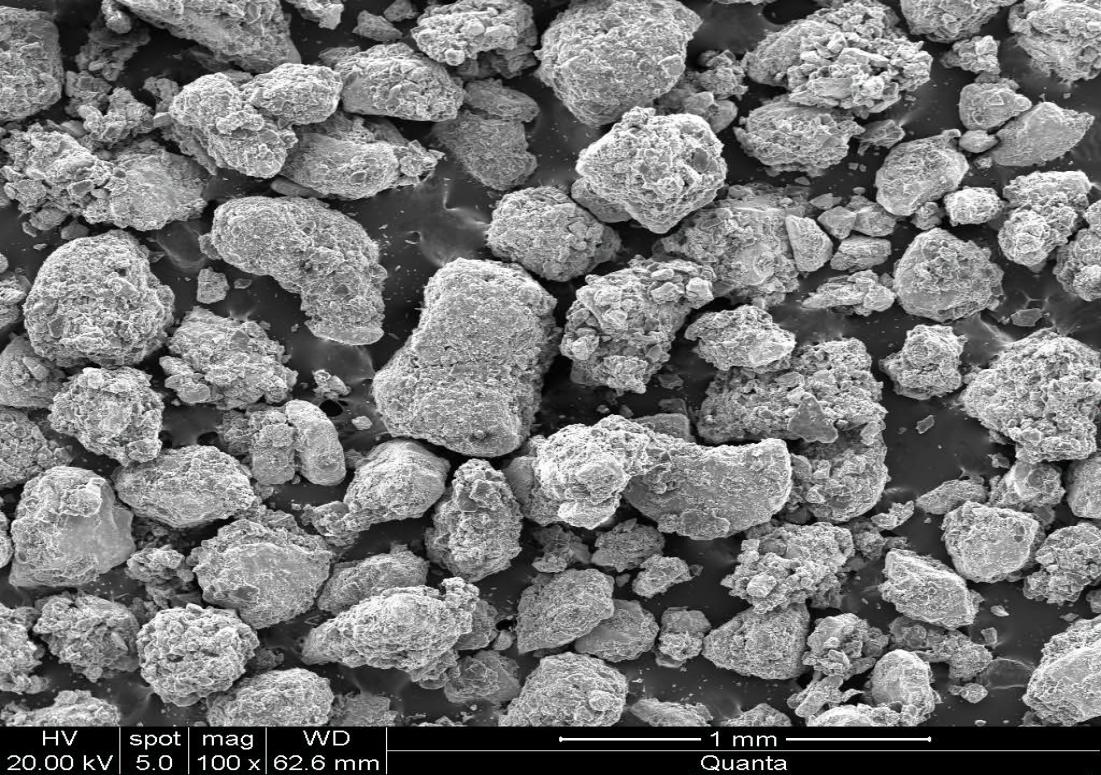
Figure 2:
Microscopic characteristics of microporous metal ceramic materials with an addition of 30%: distribution of larger and smaller sized microparticles
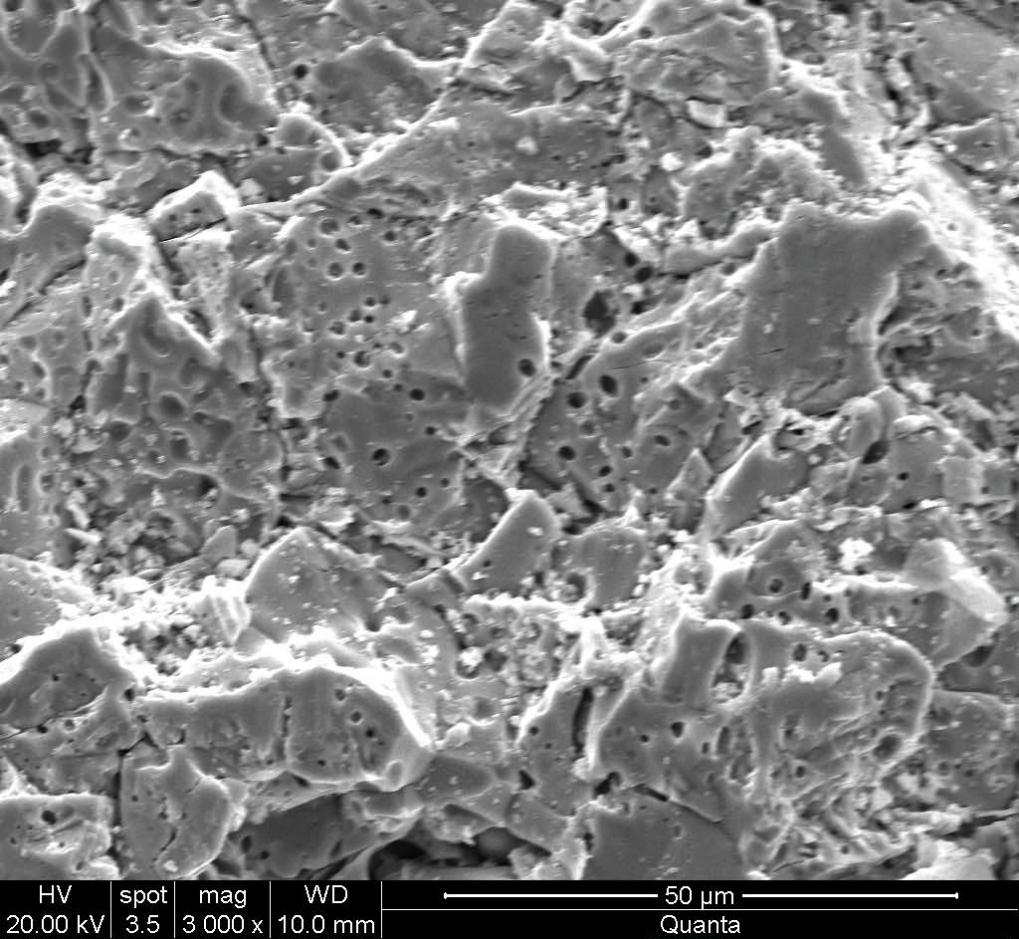
Figure 2 Void structure
5、 The internal structure and composition of materials determine the characteristics of microporous metal ceramic materials:
The biggest problem with NAO (deduced as asbestos free ceramic friction material) material in the current brake pad formula is that the high temperature cohesive heat cannot be eliminated, causing voids in the product. When encountering heavy rain and long-term humid air, the salinization of friction material products causes the friction material (brake pad) to loosen, resulting in the failure of the friction material (brake pad).
1. Micro porous metal ceramic materials have undergone mechanical structural changes using metals and ceramics, maintaining good heat dissipation and static electricity dissipation functions of metals while improving spark phenomena caused by heavy metal ratio, rust, and high-temperature friction. Due to its microporous structure and comprehensive functions, this material reduces the phenomenon of product voids caused by high-temperature cohesive heat. This reduces the degree of loosening of the friction material (brake pad) after salinization.
2. We usually use good high-temperature friction fillers, such as calcined aluminum oxide, polished aluminum oxide, zircon sand, and zircon powder, whose Mohs scale hardness is generally 6-7, so it is one of the main factors to increase high-temperature noise sources during high-temperature friction. The Mohs scale hardness of microporous cermet materials is only 2-3, which effectively reduces the noise sources and eliminates and reduces the noise of friction materials according to the different dosage.
3. In semi metallic friction materials, products with slightly higher friction coefficients will experience random metal inlay phenomena. Using microporous metal ceramic materials, partially replacing metal fibers, can improve and reduce the inlay phenomenon.
4. The microporous structure of microporous metal ceramic materials effectively reduces the ratio of cold compression to hot compression of friction materials. When in a hot state, micropores absorb a large amount of heat, eliminating and reducing the expansion factor of the product. When returning to the cold state, the microporous structure of the material will not cause the product to shrink.
5. The microporous metal ceramic material will never damage the dual parts because its Mohs scale hardness is only 2-3.
6. The residual amount of microporous metal ceramic materials after ablation at 800 ℃ is still 96.7%; The mass loss is very small, and the high temperature will not lead to large Cavitation in NAO materials, reducing the unit source of salinization of products.
6、 Product characteristics:
1. Smooth braking friction curve
2. Low expansion coefficient, no expansion at high temperatures, no shrinkage at low temperatures;
3. Never rust; (Except in the case of strong acids or alkalis),
4. Eliminating static electricity: Effectively eliminates static electricity in the mixture, reducing and suppressing some dust. Specially designed for organic fibers.
5. Friction braking at high temperatures does not generate sparks;
Green and environmentally friendly, the dust generated during friction braking is non polluting to soil, atmosphere, and water sources, biodegradable, and harmless to humans.
6. No metal inlay (the brake test of the automotive friction assembly has been completed, and metal inlay will not occur during braking.
7. The material has a light specific gravity (ranging from 1.5 to 2.0g/cm3) and can be adjusted according to user needs.
8. Mohs scale 2-3; It is a high-temperature friction regulator with low hardness that does not damage the dual component+
9. Has excellent heat dissipation performance.
7、 Adapted to:
Automotive brake pads, train synthetic brake pads, subway synthetic brake pads, clutch pads, conveyor belts, or engineering machinery friction materials.
8、 Conclusion:
Microporous metal ceramic materials use various inorganic ceramic materials and special processes to change the metallographic structure of metal materials. Metal materials and various ceramic materials form new metal ceramic phases, forming heterogeneous composite materials. They have characteristics such as no spark generation during braking, eliminating static electricity, never rusting, no metal inlay, reducing noise, and improving friction and wear performance.
Due to the addition of micro porous metal ceramic materials, friction materials have been improved and eliminated during braking, resulting in defects such as static electricity, dust, noise, rust, metal inlay, etc. generated by the original universal product during production and use, and have been widely recognized by users.
After testing and actual use by domestic and foreign railway, automobile, engineering machinery, and friction material manufacturers, the data and curves obtained are exciting. It will be the preferred product for high-temperature friction fillers in various railway, automobile, truck, and engineering machinery and clutch products, and also an innovation in new materials.

截屏,微信识别二维码
手机:400-969-2688
邮箱:jkdp53@163.com